where mu is parameter. For all values of mu there are 2 fixed points, one at (0,0), the other at (1,0).
For all values of mu (0,0) is a saddle.
The fixed point at (1,0) changes type:
At mu=-1 there is a Hopf bifurcation. For values of mu slightly larger than this there is a stable limit cycle around the (1,0) fixed point. As mu increases the limit cycle gets larger, until at about mu=-0.86 it collides with the fixed point at (0,0), momentarilly becoming a homoclinic orbit, and then disappears for good.
Here are some pictures that Michael Twito made using the tool at http://techmath.uibk.ac.at/numbau/alex/dynamics/index.html:
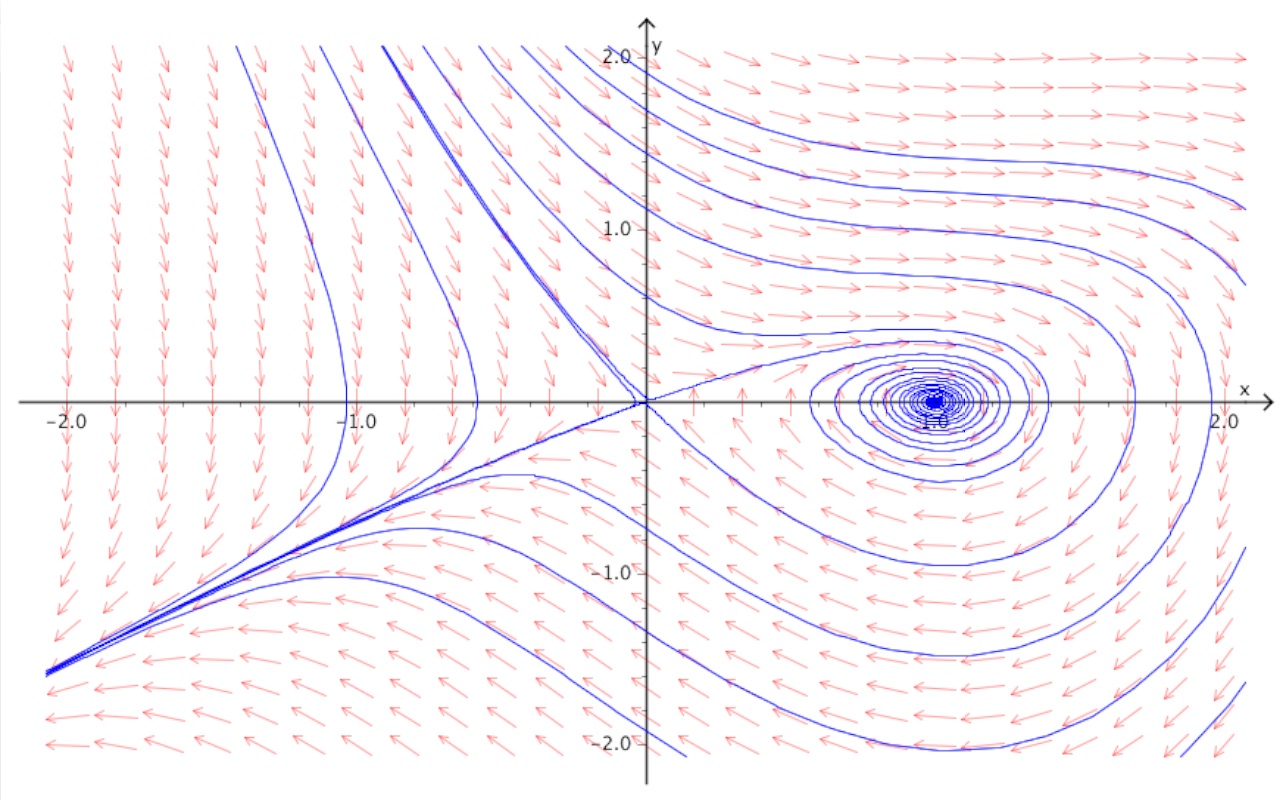
mu = -1.1. The fixed point at (1,0) is a stable focus
mu = -1.0. The Hopf bifurcation is happening
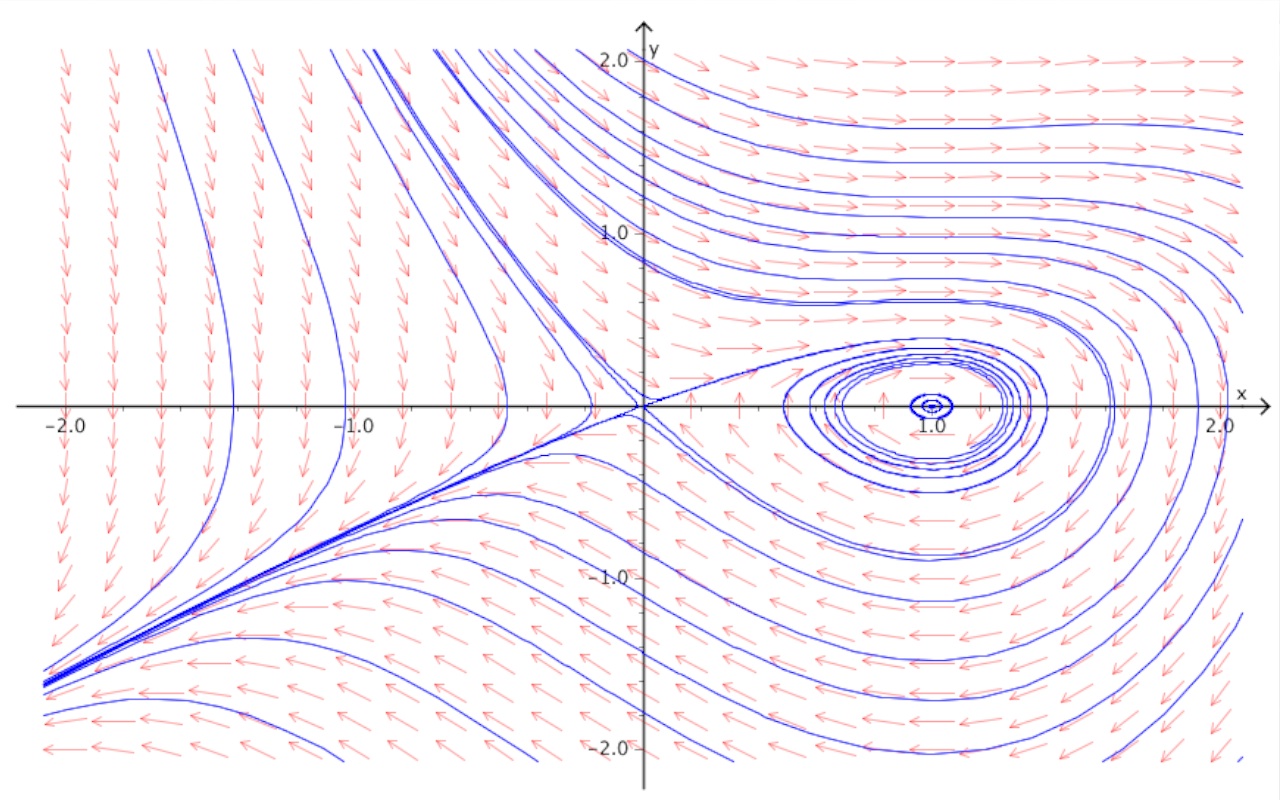
mu = -0.9. Can you see the limit cycle?

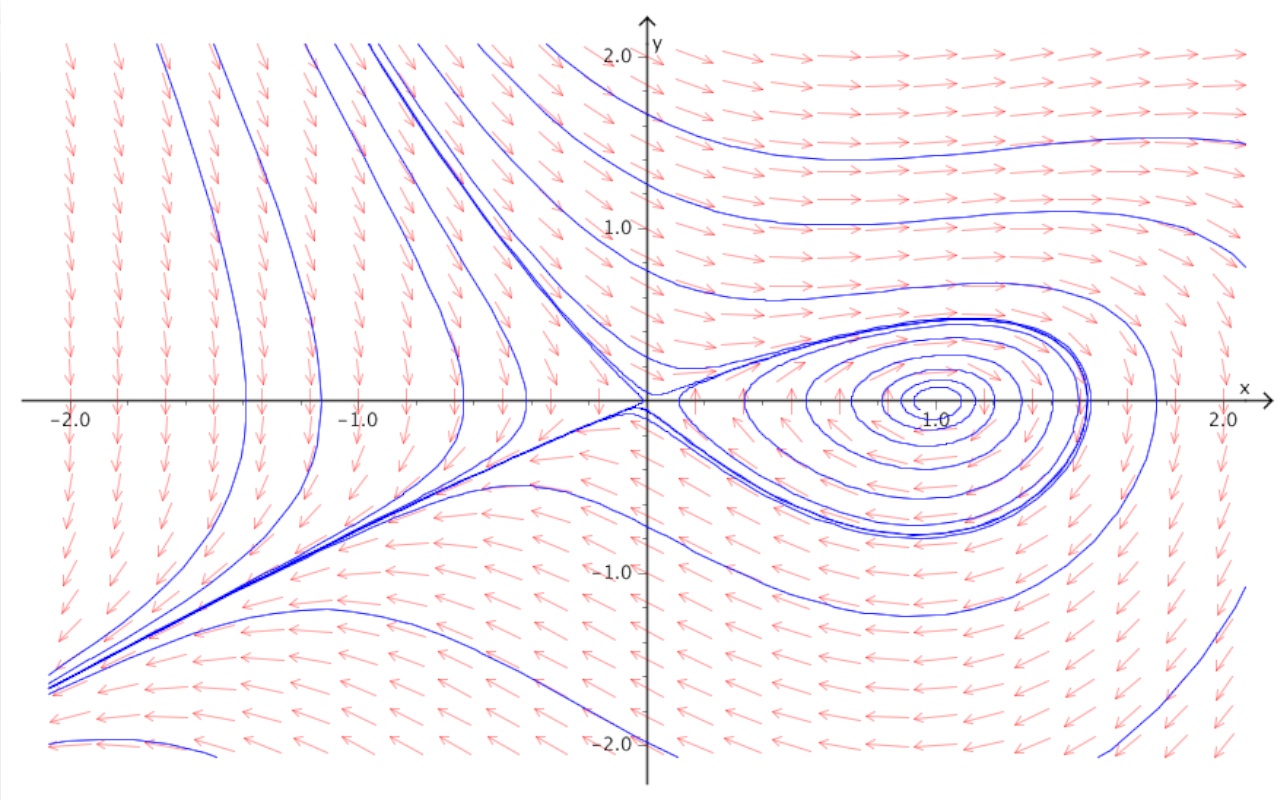
mu = -0.86. The limit cycle has collided with the fixed point at (0,0), become a homoclinic orbit
and disappeared. Orbits from close to the fixed point at (1,0) now "escape".
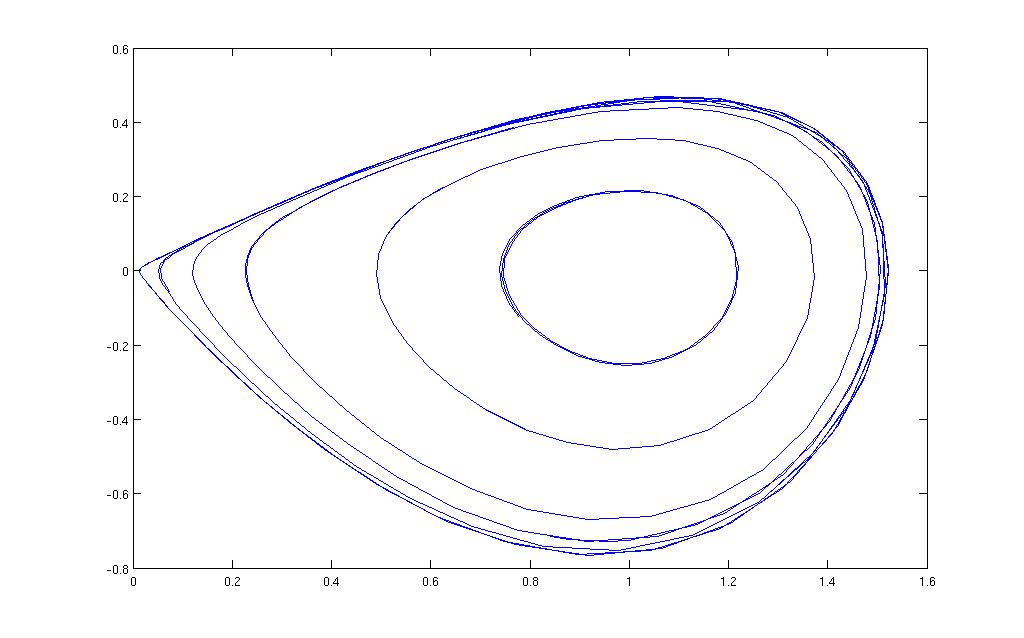
Here is a plot of the limit cycle (or a numerical version of it -- not so accurate) for
mu = -0.99, -0.95, -0.9, -0.89, -0.88, -0.87
Back to main course page
Back to my main teaching page
Back to my home page